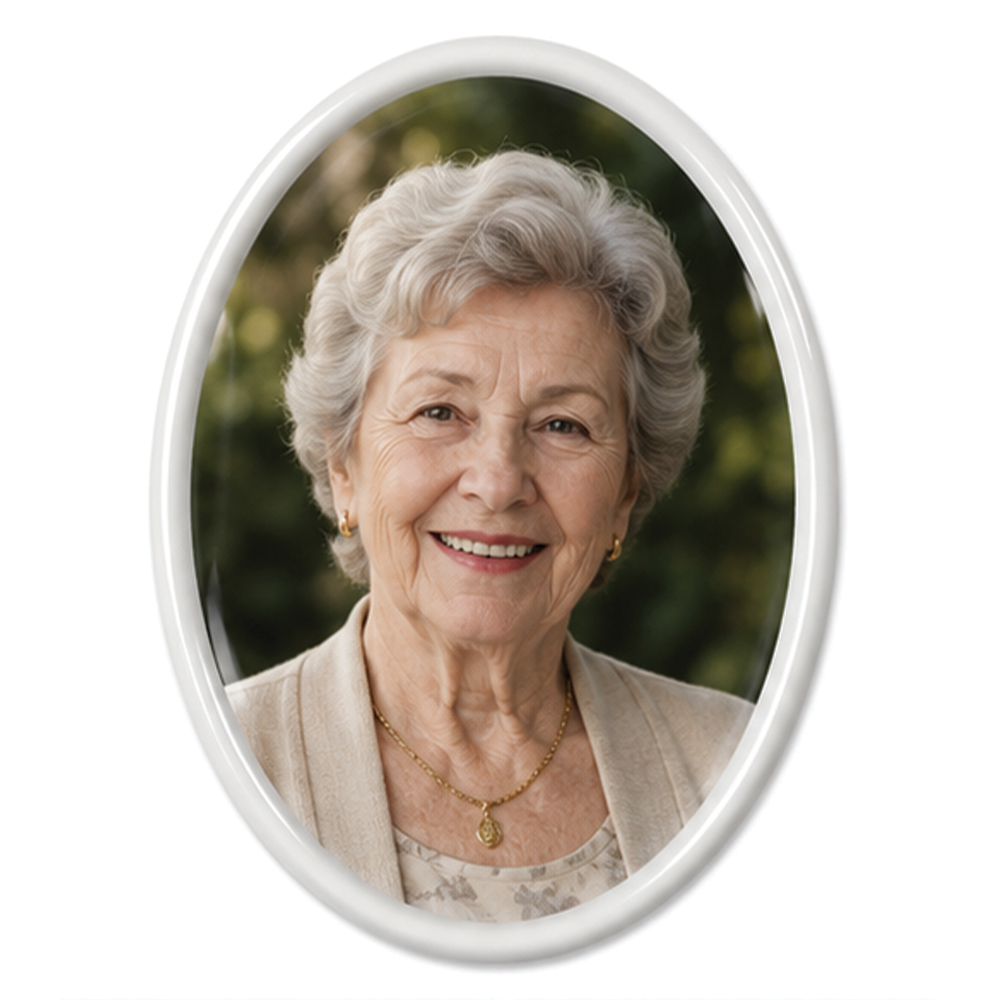
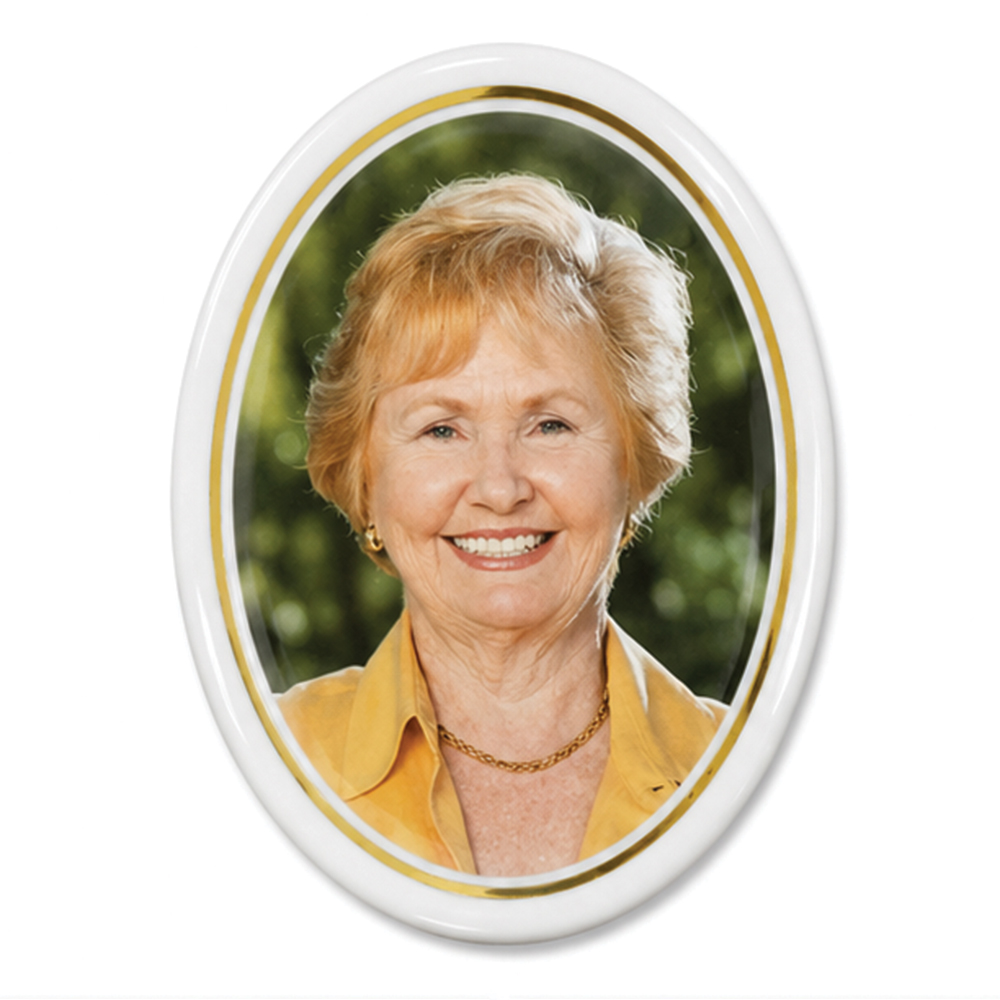
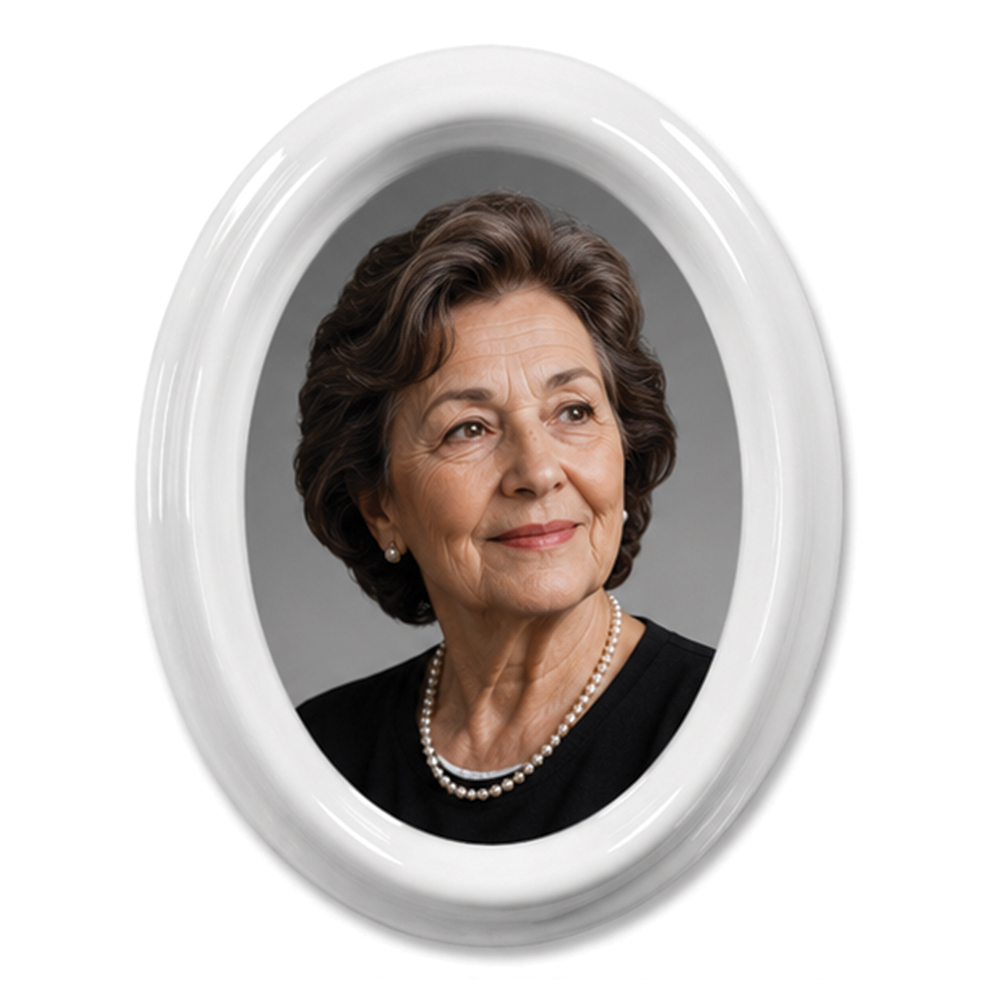
Colour or black-and-white photo on ceramic
This is one of the questions that comes up almost every time. There isn't a single answer, because it depends on the photograph you have, on the stone, and on how the family remembers the person. Below we lay it out calmly.
How each version looks on the monument
A colour photograph brings the face closer to how we last saw it. Eye colour, skin tone, a familiar shirt — all of it helps with instant recognition. On white marble and light granite, a colour photo looks vivid and warm.
Black and white gives a more sober, timeless note. On polished black granite, the contrast is elegant and the photograph looks like part of the stone rather than added on top of it. Many families choose black and white for elderly people, because it fits the way they were usually photographed in life.
What we do with old photographs
Most of the photos we receive are old: black and white or sepia, sometimes yellowed, with scratches or missing corners. That's not a problem. We restore them — cleaning the marks, repairing damaged areas, balancing the light — and only then prepare them for firing. Restoration is included in the price, not charged separately.
If you wish, a black-and-white photograph can be colourised. We add colour with restraint: natural skin tone, hair colour, a fitting shade for clothing. We don't force strong colours, because the result would look artificial. Colourisation is also included in the price.
When we recommend keeping it black and white
- When the original is very damaged and colourisation would hide details rather than reveal them.
- When the monument is in black granite and the other elements — letters, ornaments — are gold or silver.
- When the family remembers the person from one specific black-and-white photograph and wants exactly that image.
- When the same monument already has a black-and-white photo and the new plaque needs to match it.
When colourisation is worth it
Colourisation helps especially when the only available photograph is old, but the face is clear. Colour brings back something of the person's presence and makes the photo feel closer to grandchildren and great-grandchildren who never met them. It also helps when the monument is in white marble, where a black-and-white image can look faded.
You don't have to decide right away. Send us the photograph, we'll prepare both versions, and you can choose after seeing them side by side.
The durability is the same
Whichever version you choose, the image is fired onto the ceramic at high temperature. Neither colour nor black and white fades faster — the process is identical, and the resistance to sun, rain, and frost is the same.
Frequently asked questions
Does colourisation cost extra?
No. Colourisation, restoration, and retouching are included in the price shown, for every product.
Does a colour photo fade faster on the stone?
No. The image is fired onto the ceramic at high temperature, and the resistance to sun, rain, and frost is the same for both versions.
Can I see how it will look before production?
Yes. We send you a preview and, if you wish, both versions — colour and black and white — so you can choose with full knowledge.
What if I only have an ID-style photo?
It can be used. What matters is how clear the face is. We look at the file and tell you honestly which size it can support without turning out blurry.