Funeral ceramic photography, explained simply
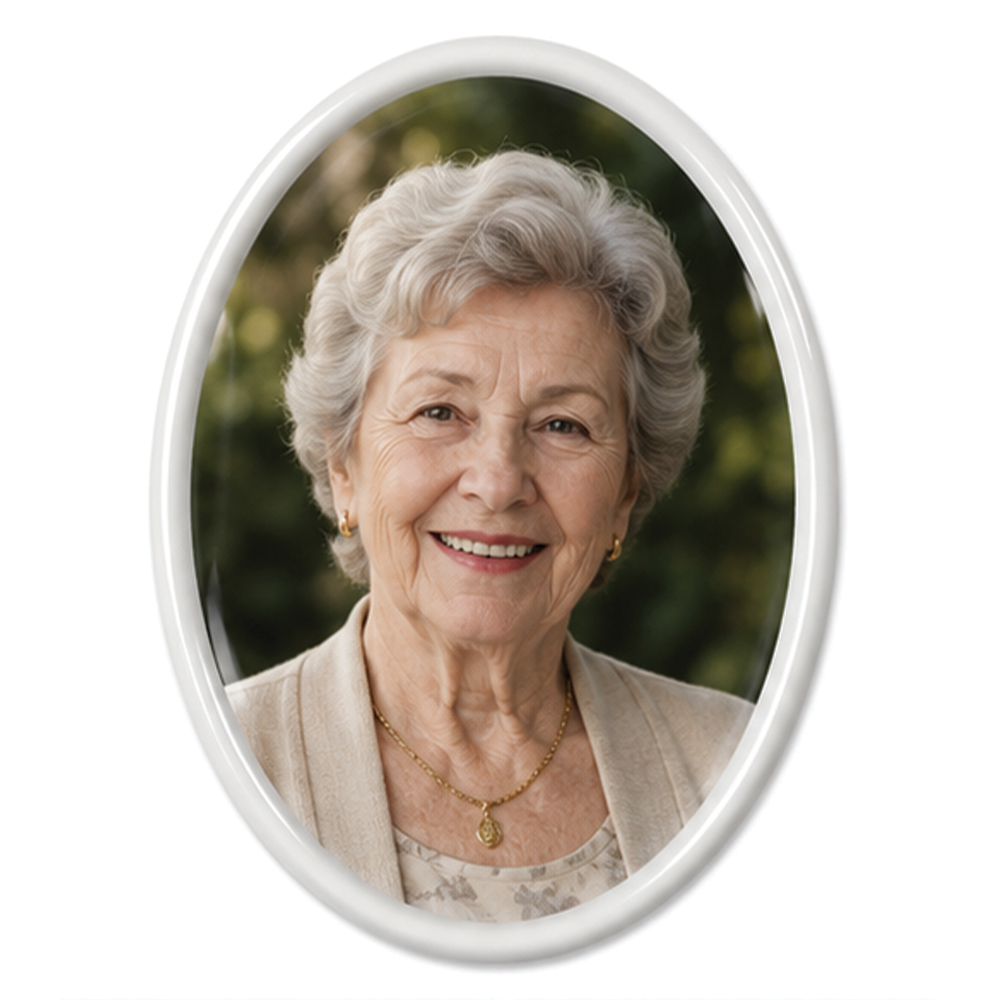
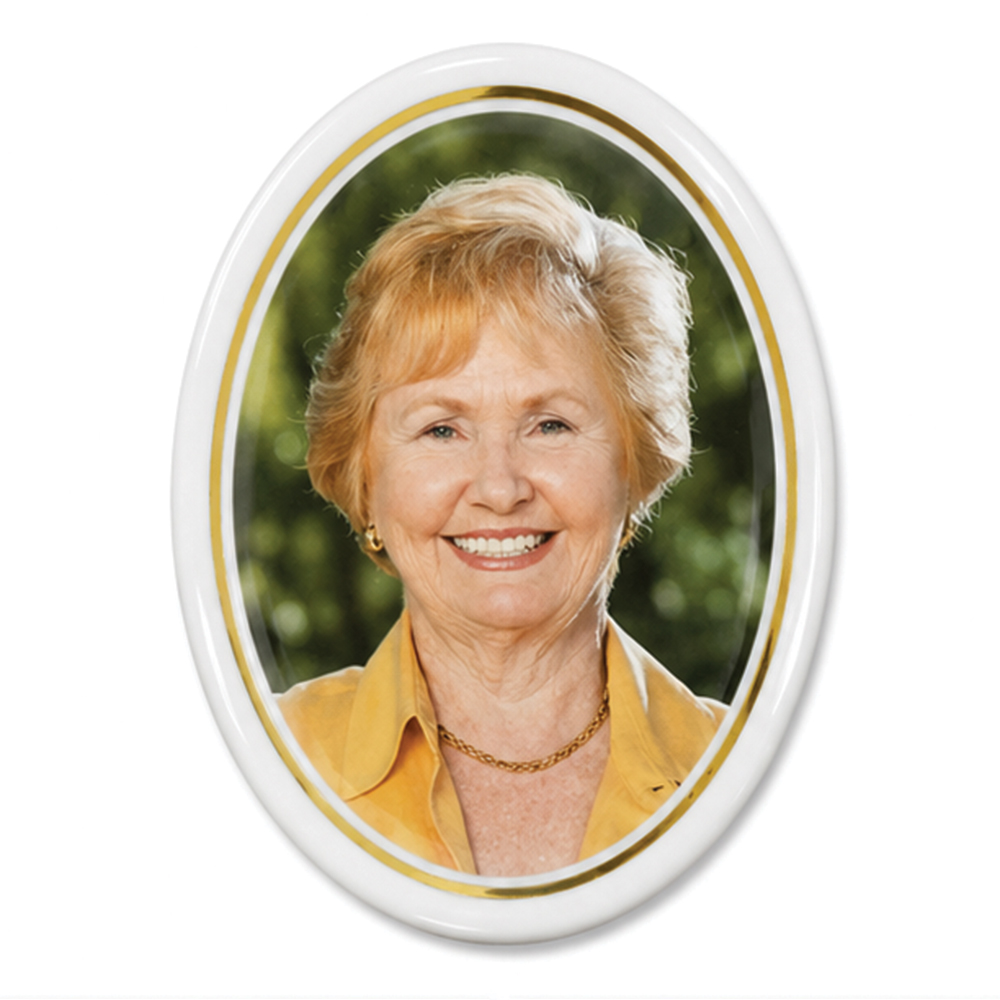
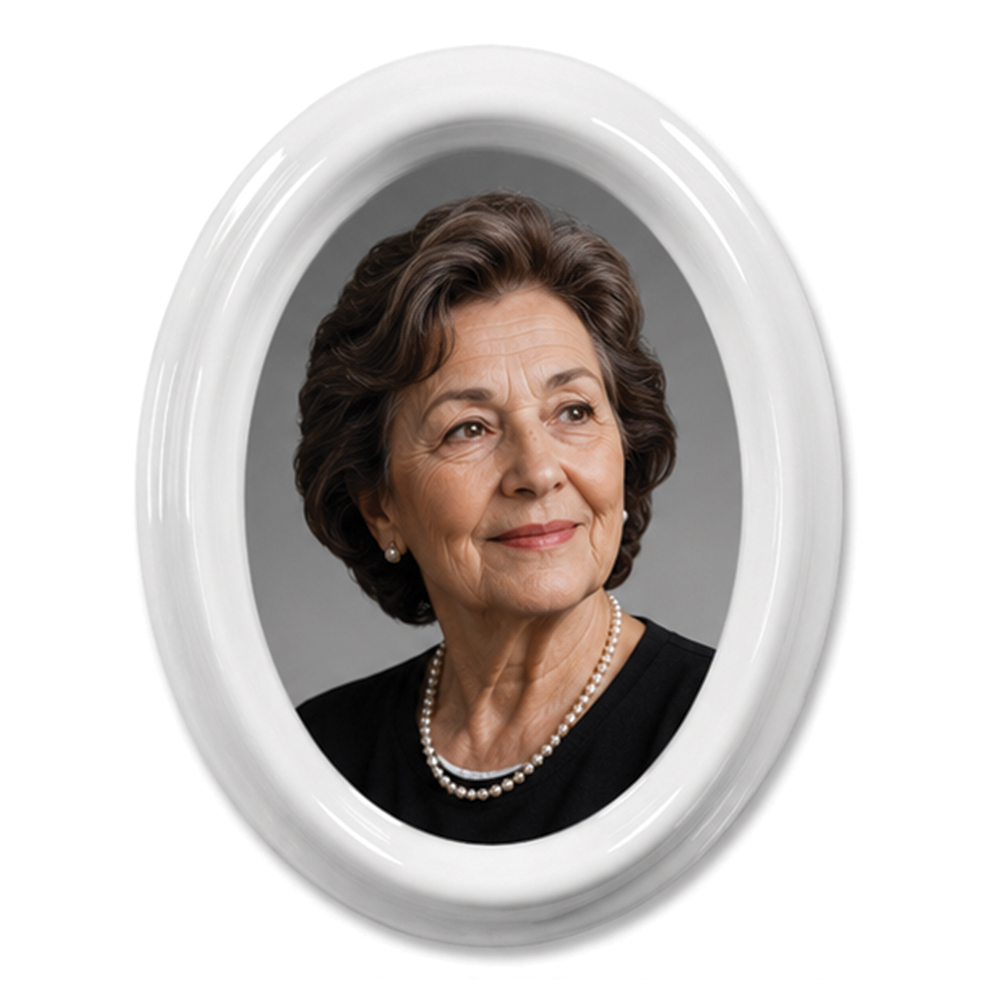
Funeral ceramic photography is the process by which a photograph becomes permanently fixed onto a ceramic or porcelain plaque, later mounted on a cross or monument. The name sounds technical, but the process itself is easy to understand and has been used in European cemeteries for over a century.
The difference from an ordinary photograph
A printed photograph, however well laminated, has the image sitting on top of its backing. Moisture gets in at the edges, ultraviolet rays fade the inks, and within a few years the colours dim. In ceramic photography, the image is fired into the surface at high temperature. There is no longer a separate layer that can peel or wash away.
How it's made, step by step
- The photograph received is restored: marks and scratches are cleaned, the light is balanced, damaged areas are repaired.
- If it's black and white and the family wishes, it's colourised with natural tones.
- The image is cropped to the chosen shape — oval, rectangle, arch, and others.
- A preview is sent to the family for confirmation.
- The image is applied to the plaque and fired at high temperature.
- The plaque is packed securely and shipped.
Ceramic or porcelain
The terms are often used interchangeably. The practical difference lies in the density of the material: porcelain is finer and less porous, so it withstands freeze-thaw cycles better. Both, when properly fired, last decades outdoors.
What choices you'll need to make
Three, essentially: the plaque's shape, its size, and whether the image stays black and white or is colourised. Each of these has its own dedicated article on the site, and if you'd rather not choose alone, send us a photograph of the monument and we'll advise you.
Where it's mounted
Most often on the cross or monument at the grave, but also on urn walls, memorial plaques, or double monuments. Mounting can also be done without a stonemason, using an adhesive suited for stone.
How much it costs and how long it takes
Prices start from the smallest size and increase with the surface area and complexity of the shape, shown directly on each product page. Restoration, colourisation, and retouching are included. From order to delivery it takes 3-7 business days, with courier delivery nationwide.
You don't have to go anywhere. The photograph is sent online, the preview arrives by email, and the plaque reaches your home by courier.
Frequently asked questions
What is funeral ceramic photography?
The process by which a photograph is permanently fired onto a ceramic or porcelain plaque, later mounted on a cross or headstone monument.
How long does it last?
Decades outdoors. The image is fired into the surface, not printed on top, so it holds up well to sun and rain.
What's the difference between ceramic and porcelain?
Porcelain is finer and less porous, so it withstands frost a little better. Both, when properly fired, last decades outdoors.
Where do I start if I know nothing about this?
Send us a photograph of the monument and the photo you want to use. We'll tell you which shape and size fit, with no obligation.