Ceramic photo shapes and when each one fits
The shape of the plaque changes more than we tend to think. The same photograph, in an oval or in a rectangle, gives two different impressions: one warmer and more traditional, the other more sober and contemporary. There is no wrong choice — only a better fit with the stone and with the person's character.
The oval, the classic shape
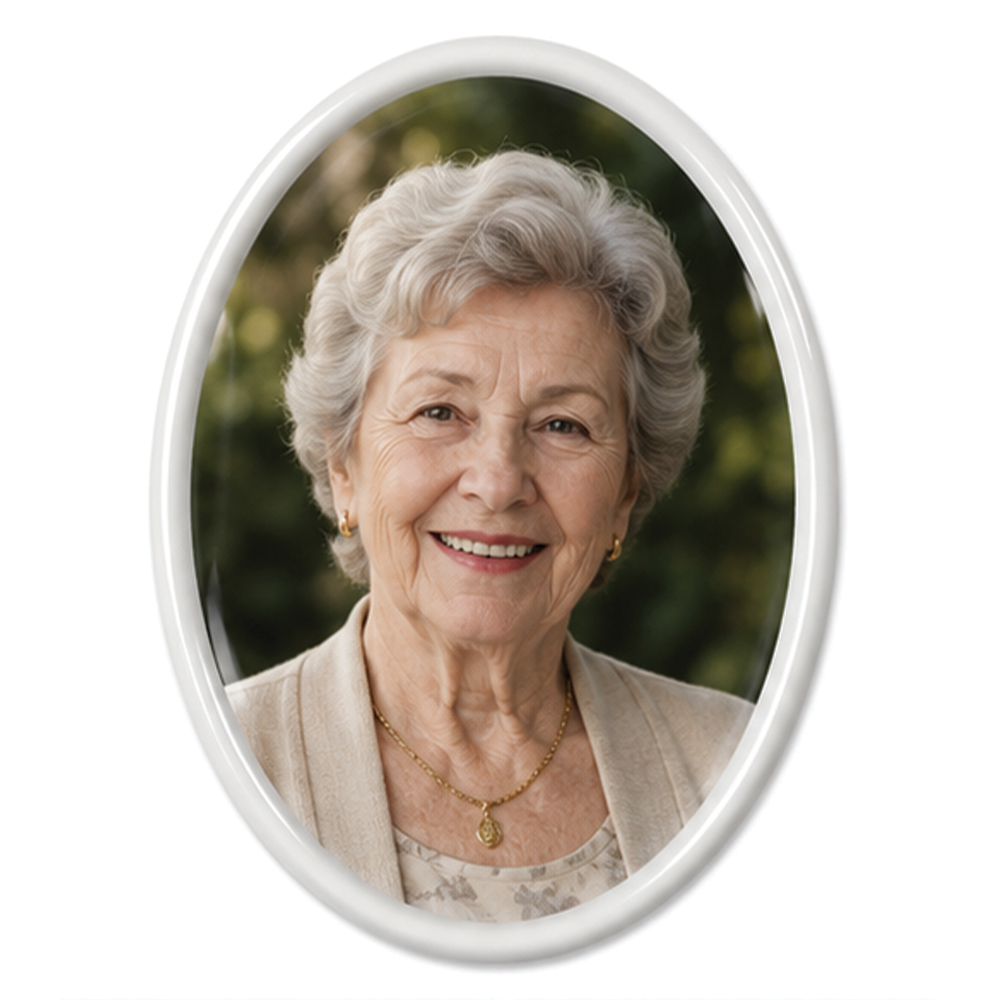
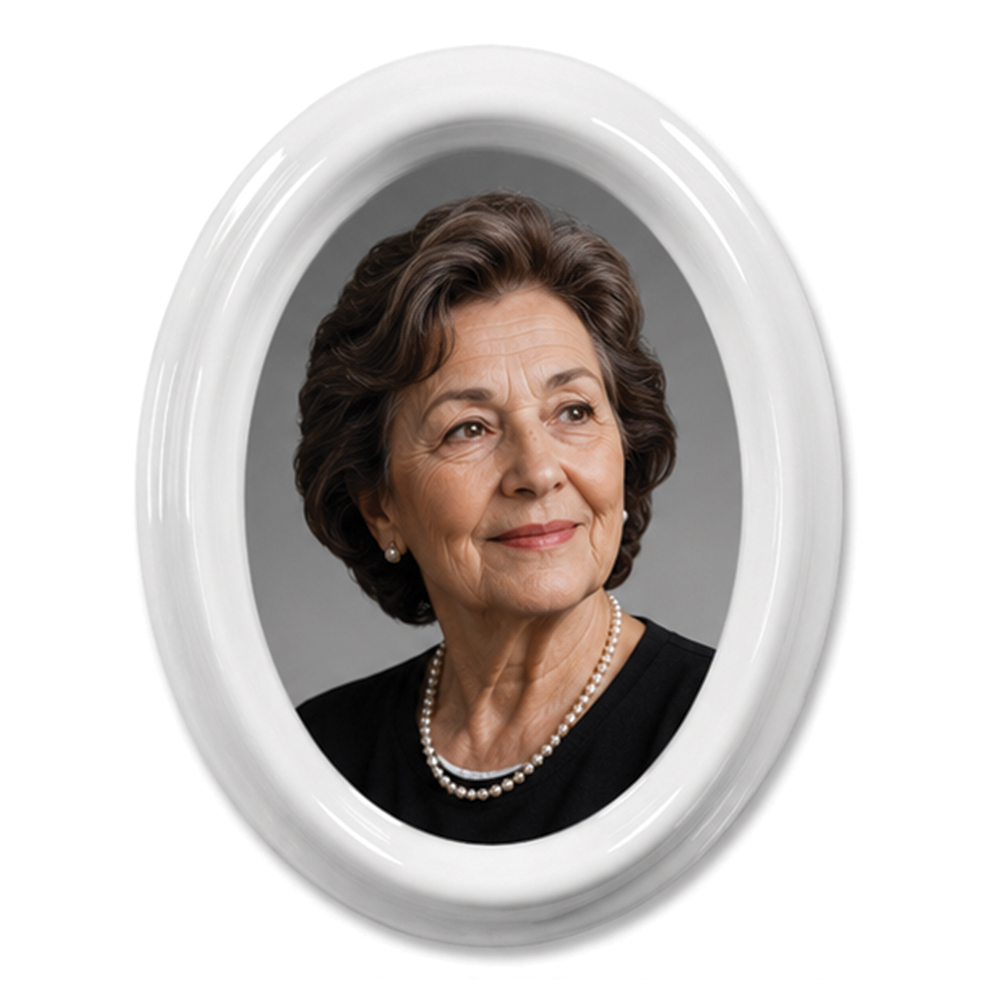
The vertical oval is the most widely used shape in cemeteries. It suits almost any cross, softens the edges, and frames a portrait naturally. It's the safe choice when you're not sure which way to go, and on older monuments it looks as if it had always been there.
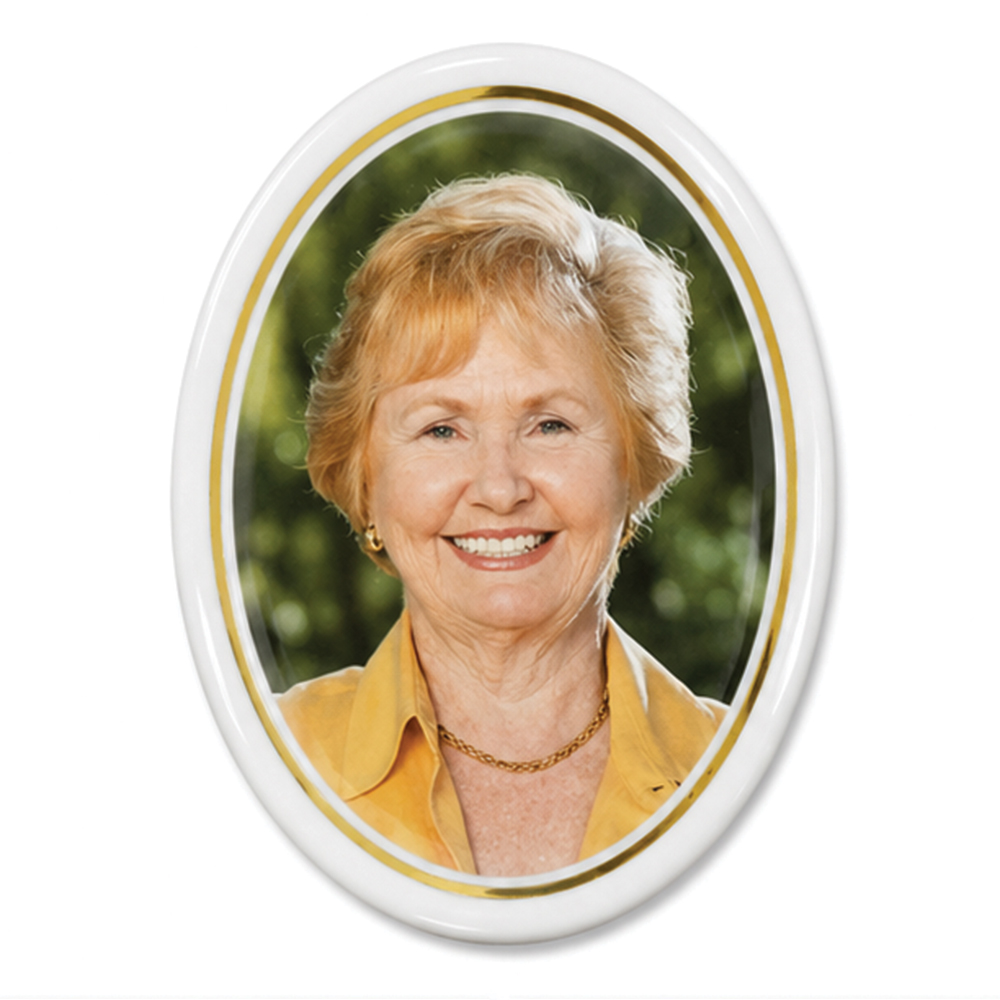
The oval with a rim has a thin outline, usually gold or silver, surrounding the image. The rim gives a note of care and clearly separates the photo from the stone, especially when the marble has a rich pattern that would otherwise compete with the photograph.
The rectangle and the square
The rectangle suits modern monuments with straight lines, in polished granite. It allows more of the photograph to fit — the shoulders, sometimes even the background — and is a good choice when you want to keep a photo as it was taken, not just the face. The square is chosen less often, usually for spaces that already exist in that shape.
The arch, the papyrus, and the book
The arch, sometimes also called an arched shape, has a rounded top and a straight base. It's a middle-ground solution between the oval and the rectangle and looks well on crosses with a carved top. The papyrus, with slightly wavy edges, suggests a sheet of paper and is chosen when a warmer note is wanted.
The open book shape is usually used for double monuments, or when, alongside the photo, a longer text is wanted — a name, dates, a line of prayer. It doesn't suit every stone, but where it does, it looks distinctive.
The heart and the circle
The heart is generally chosen for children, for young people, or when the family wants a clear, affectionate symbol. It's a shape that says something about the relationship, not only about the person. The circle is discreet and modern, suited to small plaques or monuments with a minimal design.
How the shape matches the stone
- Simple cross in white marble: oval or oval with rim — the most natural choices.
- Massive monument in polished black granite: rectangle or arch, which follow the straight lines.
- Cross with a carved or arched top: arch, which echoes the curve above.
- Double monument: open book, or two identical ovals placed symmetrically.
- Narrow space, among other elements: circle or small oval, which doesn't crowd the surface.
The photograph matters too
A portrait with straight shoulders and the gaze toward the camera fits well into an oval. A photograph taken from the side, or one where the person is caught in an ordinary moment, often sits better in a rectangle, where the context isn't lost. If the original is a group photo from which we crop out a single person, the oval helps: it hides the cut edges and keeps the focus on the face.
If you can't decide, send us the photograph and a photo of the monument. We'll show you how it would look in two or three shapes, before you order.
Frequently asked questions
Which shape is ordered most often?
The vertical oval. It suits almost any cross or monument and is the shape the eye is used to seeing in cemeteries.
What's the difference between a plain oval and an oval with a rim?
The oval with a rim has a thin outline, gold or silver, around the image. It helps especially on marble with a rich pattern, because it clearly separates the photograph from the stone.
Can I choose a different shape than the existing recess?
If the stone has a prepared hollow, the shape needs to follow it. On a flat surface you have complete freedom of choice.
Does the shape affect the price?
The price depends on the shape and the size, and each product has its own price table. Retouching, restoration, and colourisation are included with every shape.